
The San Francisco Smog Survival Guide: Professional Tactics for a First-Time Pass
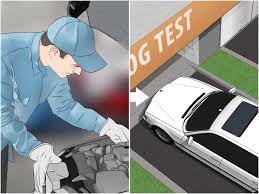
Living in San Francisco presents a unique set of challenges for vehicle owners. Between the foggy, moisture-heavy air of the Sunset District and the grueling, high-torque demands of the Filbert Street hills, your car’s emission system is constantly under fire. Most drivers treat the biennial smog inspection like a dental exam—something to be endured with gritted teeth.
However, passing the California smog check is not a matter of luck. It is a predictable mechanical evaluation. If you understand the specific parameters the state uses to judge your vehicle, you can prepare it to pass with zero stress. This guide moves past the generic “change your spark plugs” advice to give you the technical edge needed for the city’s specific driving environment.
Key Takeaways
- Avoid the “Short Trip” Syndrome. City driving prevents your catalytic converter from reaching the $600°F$ threshold required for peak chemical efficiency; a long highway run is your best preparation tool.
- The “Check Engine” light is the finish line, not the start. If that light is on, or if you recently cleared it, the station’s computer will automatically reject your car for “Not Ready” status.
- Physical integrity beats chemical additives. A cracked rubber boot on your intake manifold will cause a failure that no bottle of “Pass-in-a-Can” fuel treatment can fix.
Why San Francisco Geography Kills Emissions Systems
The geography of San Francisco is a nightmare for internal combustion engines. Frequent short trips, where the car barely reaches operating temperature before being parked, lead to “moisture loading” in the exhaust. This moisture can cause premature degradation of the oxygen sensors.
Furthermore, the extreme inclines of the city force your engine into “Open Loop” mode more often than highway driving. In this mode, the computer ignores the oxygen sensors and dumps extra fuel into the cylinders to prevent overheating under load. This results in heavy carbon deposits on the EGR (Exhaust Gas Recirculation) valves.
When you look for a San Francisco smog check station, remember that your car has likely been “working” much harder than its odometer suggests. A car with 50,000 miles of SF driving often has the wear and tear of a car with 100,000 miles of flatland highway driving.
The Myth of the Quick Reset
The biggest mistake I see beginners make in the shop is trying to “trick” the computer. If your Check Engine light comes on, you might be tempted to disconnect the battery to clear the light right before pulling into the test bay.
This is a guaranteed failure.
Modern cars (post-2000) use “Readiness Monitors.” These are essentially a series of internal mini-tests your car runs on itself while you drive. If you reset the computer, you wipe all that data. When the technician plugs into your OBDII port, the machine will see “Incomplete Monitors” and terminate the test. Depending on the car, it can take 50 to 100 miles of specific driving to get those monitors to flip back to “Ready.”
Advanced Troubleshooting: The Three Pillars of Passing
To ensure a pass at a smog check near me, you need to address the three ways the state evaluates your car: the Visual, the Functional, and the Emissions.
1. The Visual Inspection (The “Look” Test)
The technician will spend several minutes under your hood with a flashlight. They are looking for anything that doesn’t look like it came from the factory.
- The PCV System: Look for the thick rubber hoses coming off your valve cover. If they are soft, “mushy,” or cracked, replace them. They carry oil vapors back to the engine; a leak here is an automatic fail.
- The Air Intake: If you have a shiny metal air intake, it must have a CARB Executive Order (EO) sticker. If that sticker is missing or peeling, the tech cannot pass you.
- Modified Timing: On older cars, the ignition timing must be within a few degrees of the factory spec. If you’ve advanced your timing for more power, you’ll need to dial it back for the test.
2. The Functional Test (The “Brain” Test)
This checks if the car’s computer is communicating correctly and if the safety systems are intact.
- The Gas Cap: This is the most common failure in the Bay Area. The rubber gasket on your cap dries out due to the salty air. A new cap costs $15 and takes five seconds to install. It is the cheapest insurance you can buy for a smog check.
- The MIL (Malfunction Indicator Lamp): The tech will turn your key to the “On” position without starting the engine. If your “Check Engine” bulb is burnt out and doesn’t light up, you fail.
3. The Emissions Test (The “Tailpipe” Test)
For older cars on the rollers (the dynamometer), the machine measures what is actually coming out of the back.
- HC (Hydrocarbons): This is raw, unburnt gas. If your HC is high, you likely have a “lean misfire” or worn-out spark plugs.
- CO (Carbon Monoxide): This is partially burnt gas. High CO usually means your air-to-fuel ratio is too rich. Check your air filter; if it’s clogged, the engine is “choking” on fuel.
- NOx (Nitrogen Oxides): This is the “Heat” pollutant. If your engine is running too hot, NOx spikes.
Professional Insight: The “Cold Start” Trap
When you are actually standing over the hood of a car, you can often smell a failure before the machine detects it. If you smell a “rotten egg” scent, your catalytic converter is likely failing or being overwhelmed by a rich fuel mixture.
In San Francisco, many people live within two miles of their local smog station. They start their cold car, drive three minutes to the shop, and shut it off. By the time the technician starts the car for the test, the catalytic converter is stone cold.
A cold converter is a useless converter. The chemical reaction inside the honeycomb requires intense heat to work. I always tell clients to drive across the Bay Bridge and back before their appointment. You want that exhaust system heat-soaked. If you can safely do so, keeping the car in a lower gear to keep the RPMs around 3,000 for a few minutes will “scrub” the converter and get it up to its $600°F$ to $800°F$ operating window.
Preparing Your Vehicle: A Step-by-Step Checklist
Do not leave it to chance. Follow this sequence in the 48 hours leading up to your test.
Check Your Fluids
Ensure your oil is fresh. Old oil is saturated with fuel vapors. During the test, the PCV system sucks those oily vapors into the engine, which can artificially raise your HC (Hydrocarbon) readings. Fresh oil is the simplest “mechanical” cheat code for a cleaner tailpipe.
Inflate Your Tires
For older cars that go on the rollers, tire pressure is critical. Low tires create more rolling resistance. This forces the engine to work harder to maintain the required test speed ($15$ mph and $25$ mph). Harder work equals more emissions. Inflate your tires to the high end of the manufacturer’s recommendation.
The Gas Tank “Sweet Spot”
Do not go to a smog check with a nearly empty tank. This can cause the fuel pump to pick up sediment or air bubbles, leading to a “lean” condition and high NOx. Conversely, a bone-dry tank might prevent the EVAP (Evaporative Emissions) monitor from running. Aim for a half-tank of fresh, high-quality fuel.
Navigating a Failure: What Happens Next?
If the technician hands you a “Fail” certificate, do not argue. The machine is the judge, and the data is objective.
Look at the “Gross Polluter” status. If your car is labeled a Gross Polluter, it means your emissions were significantly higher than the limit. This usually points to a single, major component failure—like a dead O2 sensor or a cracked exhaust manifold—rather than a “tired” engine.
The CAP Program. If your car fails and you meet certain income requirements, the State of California offers the Consumer Assistance Program (CAP). They may provide up to $1,200 toward emissions-related repairs. In a high-cost city like San Francisco, this can be a lifesaver.
Your Immediate Next Step
Before you do anything else, go out to your car and perform a “Visual Self-Audit.”
- Open the hood and look for any loose or dangling rubber hoses.
- Turn your key to the “On” position and verify the “Check Engine” light actually illuminates (this proves the bulb works).
- Check your gas cap for a cracked rubber seal.
If those three things look good, schedule your appointment at a reputable smog check near me. Remember: drive it long, drive it hard, and keep it running until the technician takes the keys. A hot, well-oiled machine is your best defense against the California BAR.