
Traditional Korean Beauty Ingredients That Actually Work in Modern Skincare
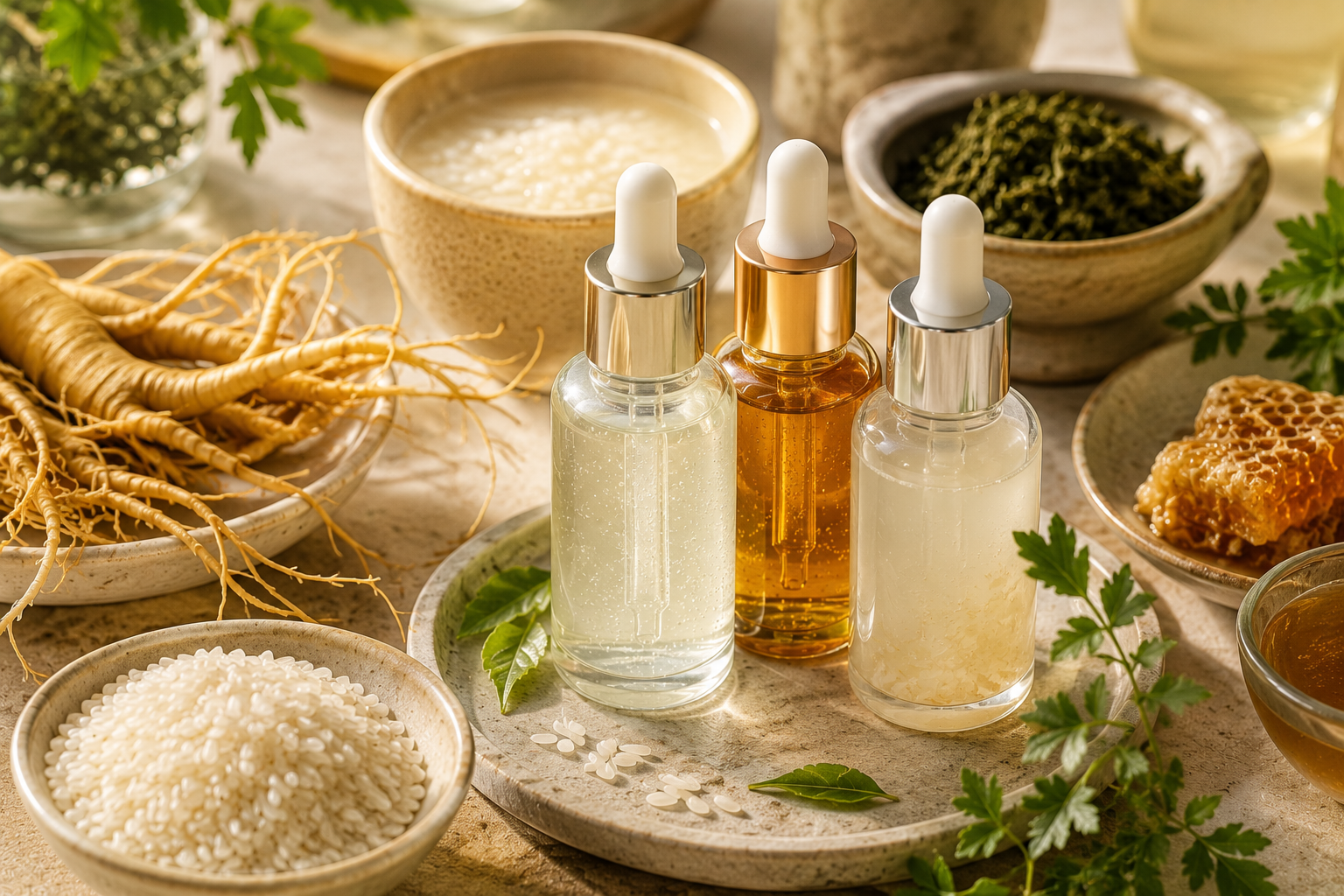
The concept of “glass skin,” as well as other K-beauty practices associated with it, is far from the traditional focus of Korean skincare routines. It was based on the use of ingredients you really needed, wanted to watch, and could count on to work. But now, as science catches up with ancient knowledge, many of those traditional K-beauty practices are proving effective.
Here, we will discuss some traditional Korean beauty products that have proven efficacy and continue to play a meaningful role in modern skincare formulations.
Why These Classic Ingredients Still Matter
As we reflect on how Koreans treated their skin in the past, we can understand that not only did they try to repair the skin, but also to maintain healthy and beautiful skin from the very beginning. And this is just what skincare science is promoting today. However, thanks to new advances in extractions and formulations, these ingredients are now used in a more scientific way to prove their worth.
Ginseng: Skin Vitality and Anti-Aging Support
Korean medicine and beauty rituals have used ginseng as a medicinal herb for more than a thousand years. Ginseng first gained recognition as a revitalizing herb but modern science now studies its effects on skin health.
Research studies demonstrate that ginseng contains ginsenosides that enhance blood flow and help create collagen while protecting the body from environmental threats. People use ginseng in skincare products because it helps maintain skin elasticity and decreases fine line visibility while enhancing overall skin health.
The product effectively handles dullness and fatigue while addressing the early signs of aging.
Rice Water: Brightening and Barrier Support
Koreans have used rice water for many years to achieve smooth skin and brightened complexions. Women historically used it to cleanse and soften the skin, noticing improved tone and texture over time.
Modern skincare products use rice extracts and fermented rice water because these ingredients provide essential amino acids and vitamins and minerals. These components help strengthen the skin barrier, improve hydration, and support an even skin tone.
Manufacturers use rice-based ingredients in their cleansers, toners and essences because these ingredients provide gentle skin care that works well for people with sensitive skin.
Green Tea: Anti-Oxidants that Soothe and Calm
Green tea is deeply rooted in Korean culture, from quelling and clarifying the skin of the mind to modern skincare applications today.
Packed full of polyphenols, especially EGCG, green tea is a powerful antioxidant. Its skincare benefits include the calming of inflammation and redness and protecting your skin from environmental stressors.
It’s particularly effective for acne-prone, sensitive, or stressed skin.
Mugwort: Calming and Skin Repair
Known as ssuk, mugwort has long been regarded for its soothing, anti-inflammatory properties. It has been and is applied to irritated or compromised skin.
Nowadays, this extract is valued for its anti-inflammatory action, skin repair, and sensitivity reduction. It also contains antioxidants and other active ingredients that calm redness and support the barrier function of the skin.
It often comes in essences or masks that are targeted towards reactive or damaged skin.
Honey and Propolis: Natural Healing with Locking Moisture
Honey is considered special in Korean skincare because it nourishes and heals the skin. Propolis is a resin produced by bees that helps repair the skin.
All put together, both are the stars in modern formulations for their anti-bacterial, anti-inflammatory, and humectant properties. Honey acts as a humectant, helping to retain moisture, while propolis acts to support the healing process and reduces irritation.
They are especially effective for compromised skin barriers, acne-prone skin, and dryness.
Fermented Ingredients: Enhanced Absorption and Balance
Korean culture has practiced fermentation since ancient times to create fermented foods. The method has been used in skincare procedures to boost the effectiveness of skincare components.
The skin can better absorb fermented ingredients because they break down into smaller molecules, including fermented soy and rice and yeast. The products provide two benefits by enhancing skin hydration and developing the skin’s natural microbial balance to protect the skin’s health.
The skincare industry depends on fermentation because it helps products become more effective while maintaining skin comfort for users.
Traditional Ingredients and Their Modern Benefits
| Ingredient | Traditional Use | Modern Skincare Benefit |
| Ginseng | Vitality and rejuvenation | Anti-aging and elasticity |
| Rice Water | Skin smoothing | Brightening and barrier support |
| Green Tea | Calming and purification | Antioxidant protection |
| Mugwort | Healing and soothing | Inflammation reduction |
| Honey | Nourishment | Moisture retention |
| Propolis | Skin repair | Antibacterial support |
| Fermented Extracts | Balance | Enhanced absorption |
Why These Ingredients Work in Modern Formulations
Scientific validation defines distinctions that separate effective traditional ingredients from their ineffective counterparts. The implementation of controlled extraction methods together with standardized concentration levels and stable product formulations enables modern skincare products to deliver consistent results.
The ingredients function because they provide specific benefits to skin protection.
FAQs
Are traditional Korean ingredients safe for sensitive skin?
Most people can use these products without problems when they follow accurate product usage guidelines. However, it is essential to conduct patch tests before using any product.
Do fermented ingredients irritate the skin?
No because fermentation creates milder skin contact through its process of breaking down elements.
Can these ingredients replace active ingredients like retinol?
Both have distinct functions. Traditional ingredients maintain skin wellness whereas actives address particular skin issues.
Do these ingredients function effectively when used in small amounts?
Yes! Many show effectiveness at minimal doses because of their strong biological activity.
Is traditional skincare better than modern skincare?
The best results come from combining traditional ingredients with modern formulation science.
Conclusion
The effectiveness of traditional Korean beauty elements in current skincare products demonstrates their functional advantages which exist beyond their cultural heritage. The core elements of skin health from ginseng, rice, green tea, mugwort, honey, propolis, and fermented extracts present day significance because they provide essential support for skin wellness, as seen in brands like Beauty of Joseon.
The ingredients create an effective product which combines traditional knowledge and contemporary scientific understanding through modern research and formulation methods. The solution provides balanced products to meet current skincare requirements of today.