
9 Mistakes Brands Make With Interactive Trade Show Games
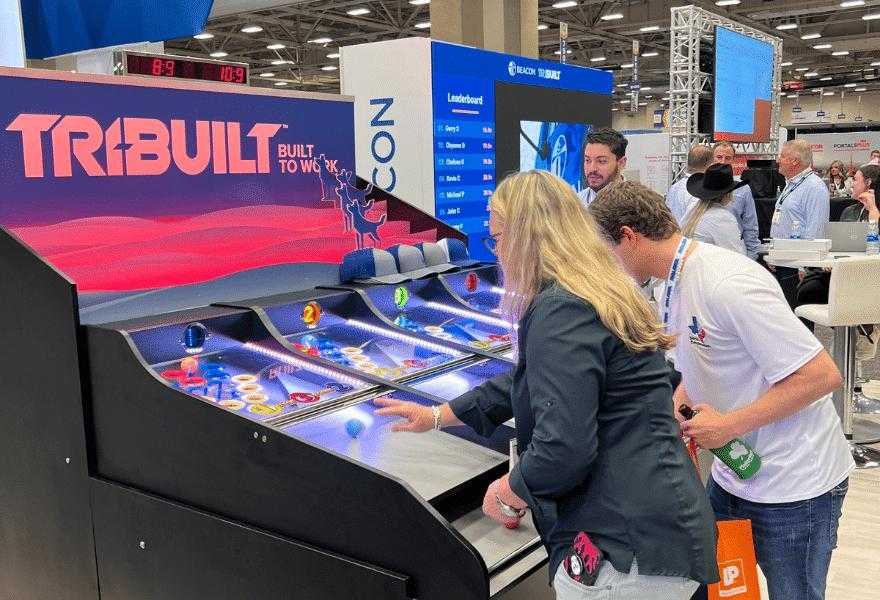
I’ve seen this happen more times than I can count.
A brand spends good money on a trade show booth. Big screens. Bright lights. Even a game.
But somehow… people walk past, glance once, and keep moving.
And later the brand says, “Games don’t really work for B2B.”
Honestly?
It’s usually not the game. It’s how the game is designed, placed, or used.
Here are 9 common mistakes brands make with interactive trade show games —and why fixing them changes everything.
1. Making the Game Too Complicated
This is the biggest one.
At a trade show, no one wants to learn a game. They want to instantly understand it.
If someone needs:
- A long explanation
- Multiple rules
- A demo before playing
You’ve already lost them.
The best-performing booth games I’ve seen can be understood in 3 seconds:
“Tap fast.”
“Hit the target.”
“Answer one question.”
Simple beats smart every single time at an expo.
2. Forgetting That the Game Is a Hook, Not the Main Product
Some brands treat the game like the star of the booth.
The result?
People play, smile, leave… and have no idea what the brand actually does.
The game’s real job is to:
- Stop foot traffic
- Start a conversation
- Create a natural opening for the staff
If the game overshadows the brand message, it’s doing too much.
3. No Clear Call-to-Action After the Game
This one hurts ROI badly.
A visitor finishes the game… and then nothing happens.
No:
- “Scan here to see your score”
- “Enter email to save results”
- “Talk to our team to unlock a reward”
That post-game moment is gold.
If you don’t guide the next step, the engagement ends right there.
4. Designing Games That Take Too Long to Play
Long games sound impressive in meetings.
They fail miserably on the show floor.
At busy trade shows:
- 30–45 seconds is ideal
- 60 seconds is the absolute max
Anything longer creates queues, frustration, and staff chaos.
Short games = more plays = more leads.
It’s boring math, but it works.
5. Relying Too Much on Internet Connectivity
This is a silent killer.
Many trade show halls have:
- Weak Wi-Fi
- Overloaded networks
- Random disconnects
If your game needs constant internet to function, you’re taking a big risk.
The safest approach?
- Fully offline gameplay
- Sync data later if needed
Nothing kills booth credibility faster than a “Please wait, reconnecting…” screen.
6. Overbranding the Game Experience
Yes, branding is important.
No, your logo does not need to appear every 2 seconds.
I’ve seen games where:
- Logos block gameplay
- Brand messages interrupt flow
- Visual clutter overwhelms players
When branding becomes aggressive, fun disappears.
The smarter approach:
- Brand the environment
- Brand the result screen
- Brand the reward moment
Let the game breathe.
7. Not Training Booth Staff on How to Use the Game
This is underestimated.
A great game with unprepared staff becomes an expensive screensaver.
Staff should know:
- How to invite people to play
- What to say during the game
- How to continue the conversation after
Without this, the game stays isolated instead of becoming a sales tool.
8. Assuming Games Are Only for “Fun” Brands
I hear this a lot:
“We’re B2B. Games won’t suit us.”
That’s just not true.
I’ve seen interactive games work brilliantly for:
- Manufacturing
- Healthcare
- Finance
- Cybersecurity
The key is tone, not industry.
When the game aligns with the message—education, awareness, skill, decision-making—it feels professional, not gimmicky.
9. Measuring Success Only by Footfall
Many brands say:
“Our booth was crowded, so it worked.”
Crowds feel good, but they don’t pay invoices.
Better questions to ask:
- How many meaningful conversations happened?
- How many leads were qualified?
- How many follow-ups were requested?
A smaller crowd with higher-quality engagement always wins.
You can also look on this stats which shows the behaviour of attendees
Final Thought
Interactive trade show games absolutely work—but only when they’re designed with real trade show behaviour in mind.
Not how people should act.
How they actually act when walking past 200 booths with coffee in one hand and a badge in the other.
Fix even 2–3 of these mistakes, and you’ll see a noticeable difference in booth engagement and lead quality.
